
Lost in
the language?
The people, powers, and ideas you will hear about across the Void. Plus the combat symbols worth recognizing at a glance.
Know your combat icons →
- Ascetic Belts
Devices associated with the Order’s suppression of pleasure. Their purpose reaches beyond sexual desire to sensation and reward more broadly.
The Order’s methods →- Beastfolk
People with animal-like traits. A broad description of bodies and origins, not one unified species, nation, or political allegiance.
Bodies and origins →- Dream Plague
A catastrophe associated with Eroticon-V that turned reward and pleasure into compulsion. Its aftermath shaped the great powers of the Known Half.
The Dream Plague →- Echo
An incomplete trace of a mind. Something recognizable may survive without the continuity or completeness of the original person.
Identity and transfer →- Empire
The imperial political sphere, with its emperor, governors, armed forces, and civil institutions. Closely entwined with the Order, but not another name for it.
Empire and Order →- Eroticon-V
The neurovirus associated with the Dream Plague, affecting reward and arousal.
The Dream Plague →- Experience Contracts
PleasureTech arrangements for tailored experiences and customization of the self, where the terms of consent and control matter as much as the promise.
Corporate contracts →- Far Frontier
The edge of dependable charts, familiar routes, and reliable knowledge. Accounts of what lies beyond remain uncertain.
Beyond the charts → Hedonists
The everyday name for people connected to PleasureTech Industries and its sphere. Not a separate faction outside the corporation.
PleasureTech Industries™ →- Hyperlines
Known interstellar paths. Their stability, charts, and accessibility help determine where a journey is possible.
Travel between systems →- Known Half
The inhabited, connected portion of the galaxy that familiar societies chart and travel. Known does not mean fully understood or uniformly controlled.
The Known Half →
- Lithium-Prime
The therapist remembered as the founding teacher of the Order of Abstinence. Stories about his ordeal and ultimate fate are tangled with legend.
The rise of the Order →- Mind transfer
Technology that moves the question of personal identity beyond one body. Continuity, a separate copy, and an incomplete echo are not equivalent.
Who is still you? → Order of Abstinence
An ideological and spiritual power that seeks freedom from the influence of desire through discipline and correction.
The Order → Pirates
Independent crews, captains, and ports united more by resistance to ownership than by a central government.
Pirate life →- PleasureTech Industries™
A corporation whose influence reaches from neural and bodily customization to infrastructure, employment, and everyday dependency.
PleasureTech Industries™ →- Portals
Interstellar links between fixed destinations. Control of their infrastructure can make them strategic choke points.
Travel between systems →
- Redefinition Program™
PleasureTech’s reshaping of bodies and behavioral patterns to specification. Its promise of reinvention carries questions about consent and personal ownership.
Corporate contracts →
Combat icons.
A familiar symbol is a useful starting point. Check a character’s ability description for its target and when it takes effect.
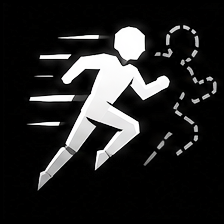 Agility
Helps a character evade certain melee attacks. It is not protection against every attack or damaging ability.
Consider the kind of threat facing the character, not just the size of the enemy’s attack.
Example An agile fighter can be difficult for a melee opponent to hit without being safe from ranged pressure.
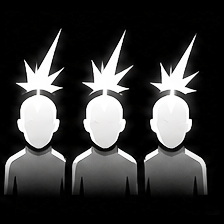 Area damage
Deals ability damage to a group of eligible targets. The affected area belongs to the particular ability; it does not automatically mean every enemy on the board.
Look at enemy formation and the area described by the skill.
Example An effect aimed at an enemy lane can pressure several characters occupying that lane.
 Attack lock
Prevents a character from making normal attacks while the effect is active. It does not, by itself, switch off every ability that character has.
Disrupt a dangerous attacker without assuming that all of its other effects have stopped.
Example A locked attacker cannot make its normal attack, but an independently triggered ability can still matter.
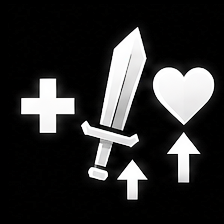 Combat boost
Increases attack, health, or both. Some boosts have a limited duration; their target and timing depend on the ability.
Match the improvement to the job: more attack for pressure, more health for staying power.
Example An attack boost makes a later normal hit stronger. It is not a separate damaging hit when the boost is applied.
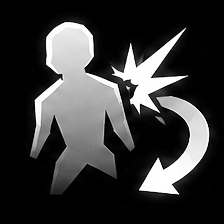 Counterattack
Retaliates against an attacker when its normal attack targets the character. This response is separate from the defender’s own normal attack.
Account for return damage when choosing which opponent your attacker will face.
Example Attacking a counterattacking defender can cost health before that defender’s next normal attack.
 Defence
Reduces incoming damage where Defence applies. Unlike Shield, it reduces a hit rather than absorbing it as a spent protection.
Useful for enduring repeated pressure, but not a promise of protection from every source of health loss.
Example A defended character can take less damage from an attack and still need healing afterward.
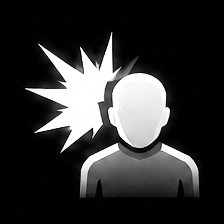 Direct damage
Deals damage when an ability triggers, separately from a character’s normal attack. The ability description determines who is hit.
Check the trigger as carefully as the target: entering battle and starting a turn are different opportunities.
Example An entry damage ability can hurt an enemy as its owner joins the board, before the owner’s normal attack.
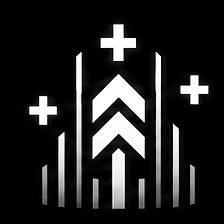 Growth
Raises attack and health at the start of the character’s side’s turn. It builds up a fighter over time rather than dealing an immediate hit.
Give a growing character time on the board to benefit from later turns.
Example A character with Growth becomes more threatening if the opponent leaves it in play.
 Healing / Recovery
Restores health to the ability’s target. Healing keeps a living fighter in play; it is not resurrection or an attack boost.
Pay attention to who can receive the heal and when the healer’s ability activates.
Example A wounded ally can recover health from a heal without becoming a stronger attacker.
 Madness
Gives a character additional normal attacks in its attack sequence. More attacks and a stronger attack are different effects.
Think in terms of repeated attacks, including the risks of repeatedly engaging a dangerous defender.
Example A fighter with Madness attacks again instead of simply adding the effect to its attack strength.
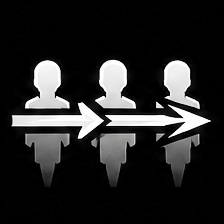 Pierce
Adds damage against other enemies in the primary target’s lane during an attack. It is not a synonym for ignoring Defence.
Look for opponents sharing a lane; a crowded lane gives the extra damage more targets.
Example Attacking a front-line enemy can also pressure another enemy occupying the same lane.
 Poison
Causes ongoing damage at the start of the affected character’s side’s turn. Applying Poison and taking its later damage are different moments.
Treat it as continuing pressure, not only as part of the hit that applied it.
Example A poisoned fighter can lose health when its side’s next turn begins, before making a normal attack.
 Regeneration
Restores health at the end of the character’s side’s turn. Its timing distinguishes it from a healing ability with a different trigger.
The character must stay alive long enough to reach that recovery.
Example A wounded fighter can recover at the end of its side’s turn, but Regeneration cannot bring back a defeated fighter.
 Shield
Absorbs a damaging hit that the shield protects against, using up that protection. It is not the same as continuous damage reduction.
A shield can buy breathing room, but repeated attacks can get past a protection that has already been spent.
Example A shielded fighter can avoid losing health to a protected hit and be vulnerable to a later hit.
 Stat steal
Takes attack or health from a target and gives the stolen stats to the ability’s owner. It weakens one fighter while strengthening another.
Look at both sides of the exchange instead of treating it as damage alone.
Example Stealing attack leaves the target with less attack and the thief with more; ordinary damage does not make that transfer.
 Summon
Brings another unit onto the board through an ability. The summon needs a valid space; it is not simply a bonus to the summoner’s stats.
Consider available board space as well as what the added unit can contribute.
Example A summoning ability can add another fighter when there is room for it to enter.
 Vampire
Restores the attacker’s health after it deals qualifying attack damage. Unlike Regeneration, it depends on landing damage rather than reaching the end of a turn.
An attack that deals no damage does not provide the same recovery opportunity.
Example A wounded attacker can regain health after a damaging attack; a completely blocked hit does not provide that benefit.