Pirates
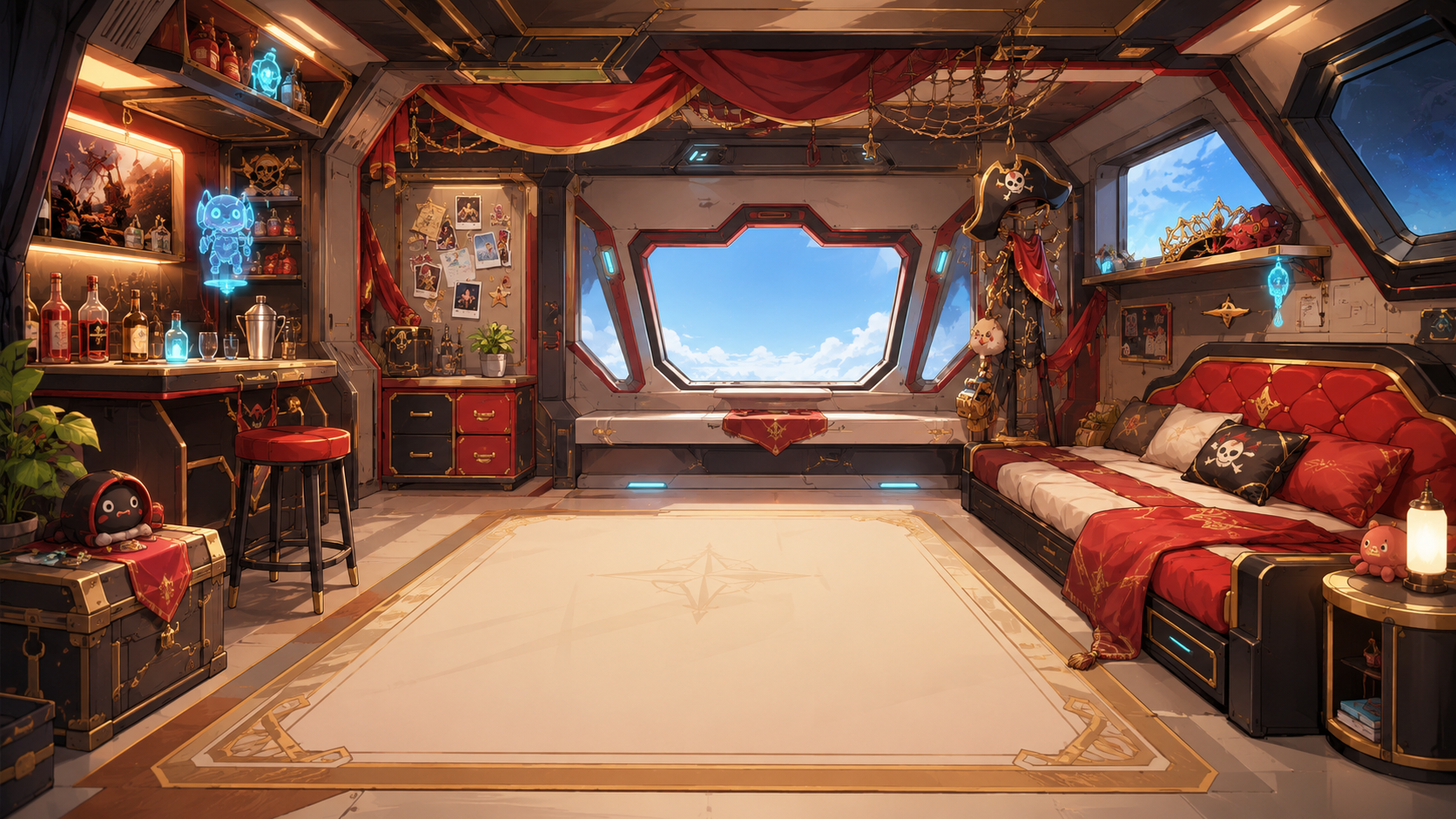
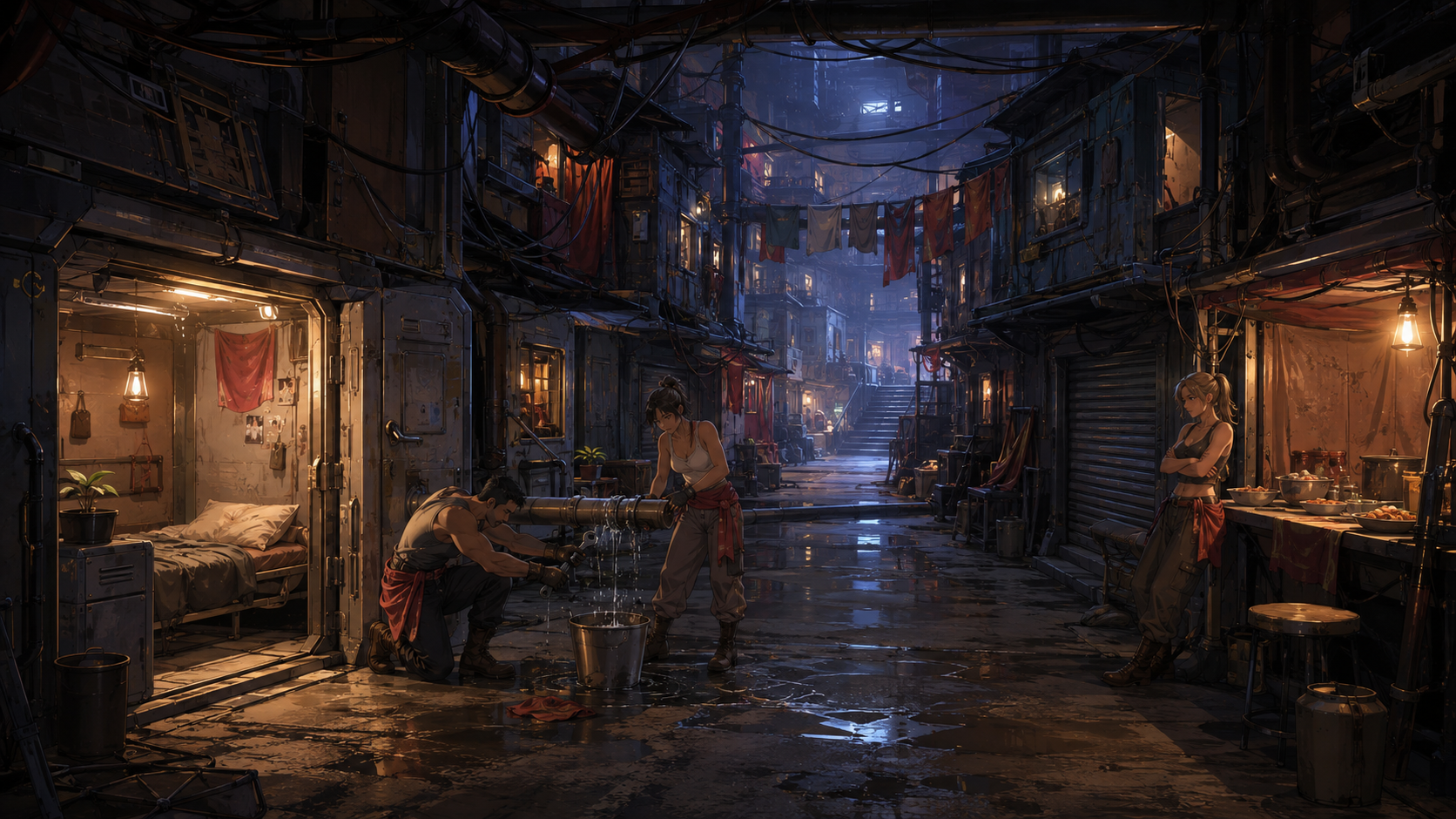
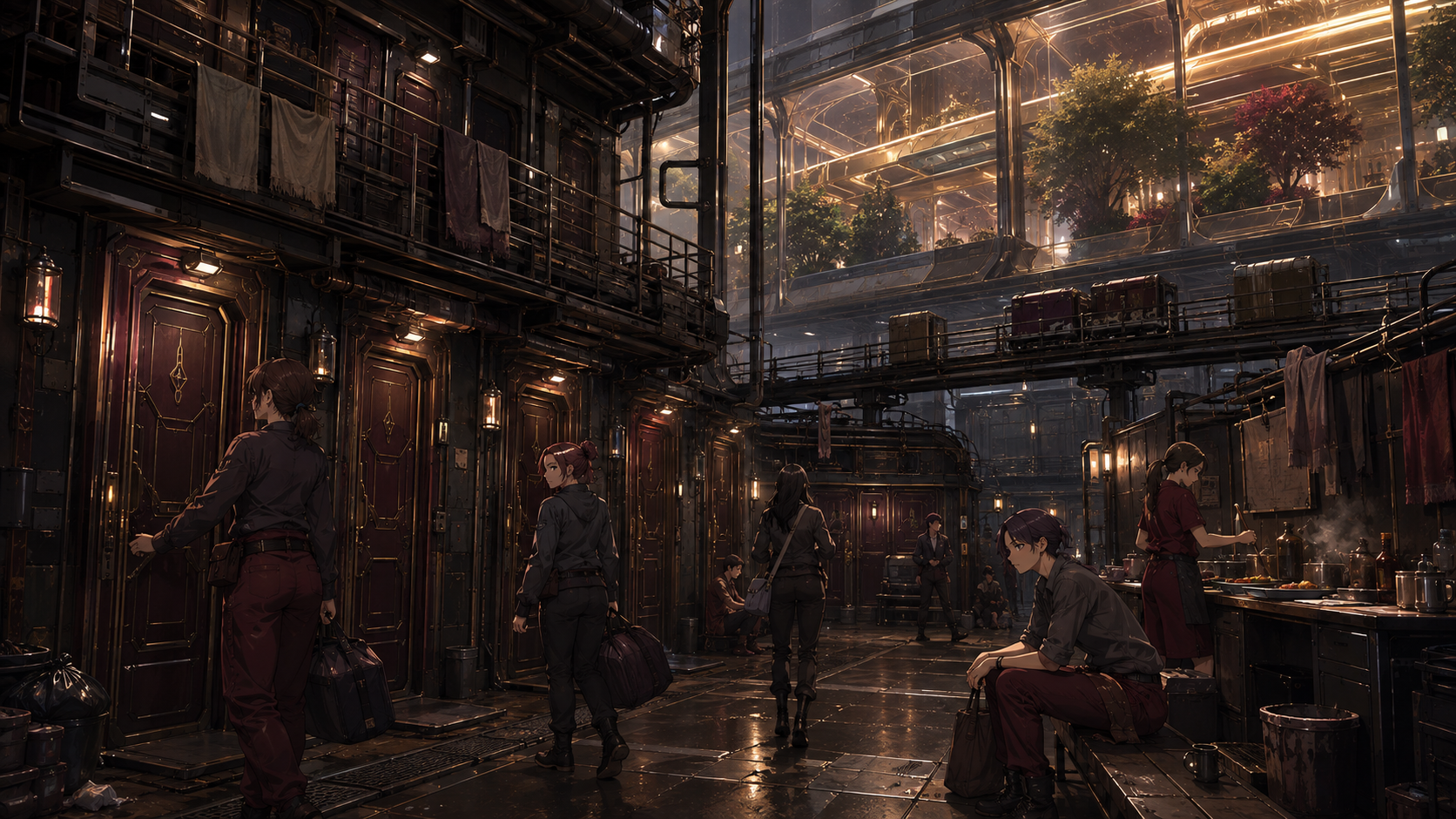
A meal, a repair, a song nobody approved. Free ports make room for useful work and useless pleasures alike. People survive through trade, salvage, and the connections they make.
See the comforts and the costs →There is always another route, another flag, another person offering to improve your life. Finding somewhere you can remain yourself is harder.

The Known Half is the inhabited, connected world: imperial systems, corporate holdings, pirate ports, and the routes that make travel between them possible. It is the part of the galaxy people can chart, argue over, trade through, and call familiar.
Even here, familiarity has limits. Records disappear. Accounts contradict one another. In a civilization capable of editing memory, a surviving archive is not automatically an honest one.
How this world took shape →The imperial sphere combines political government with the Order’s authority over acceptable belief and behavior. PleasureTech reaches through corporate infrastructure, contracts, and services. Pirate influence gathers around independent captains and the ports willing to receive them.
None of these produces a simple, evenly colored map. A neutral port can depend on corporate medicine. A trade corridor can cross rival territory under an agreement. A disputed system may matter less for its planets than for the route passing through it.
Between the centers of power lie treaty corridors, contested settlements, and dead systems where familiar guarantees stop working.
Meet the factions →A captain’s private cabin and a patched lower deck can belong to the same port. A disciplined imperial center can feel far removed from its frontier housing. Corporate luxury can be real while remaining out of reach for the workers beneath it.
A meal, a repair, a song nobody approved. Free ports make room for useful work and useless pleasures alike. People survive through trade, salvage, and the connections they make.
See the comforts and the costs →
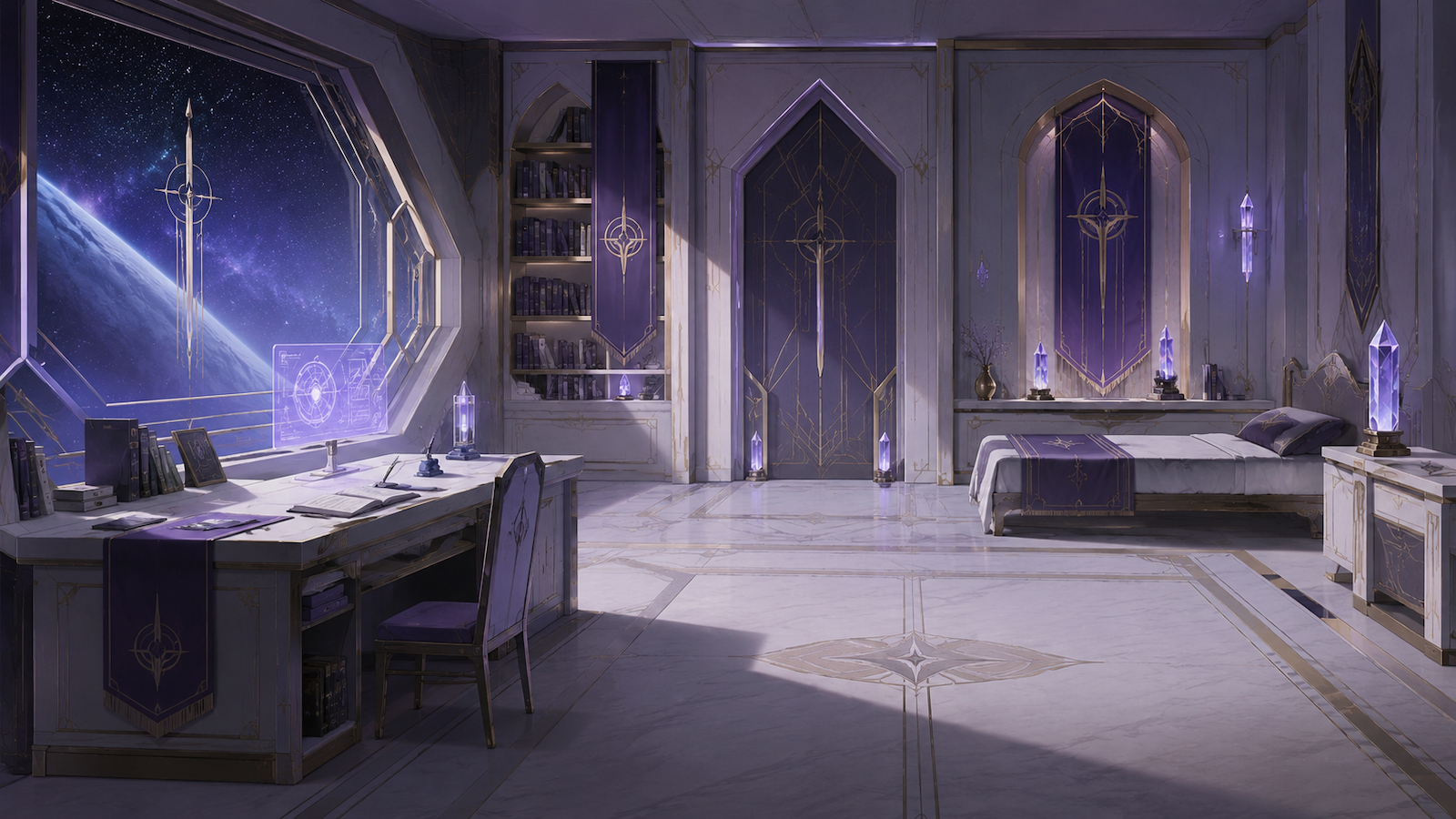
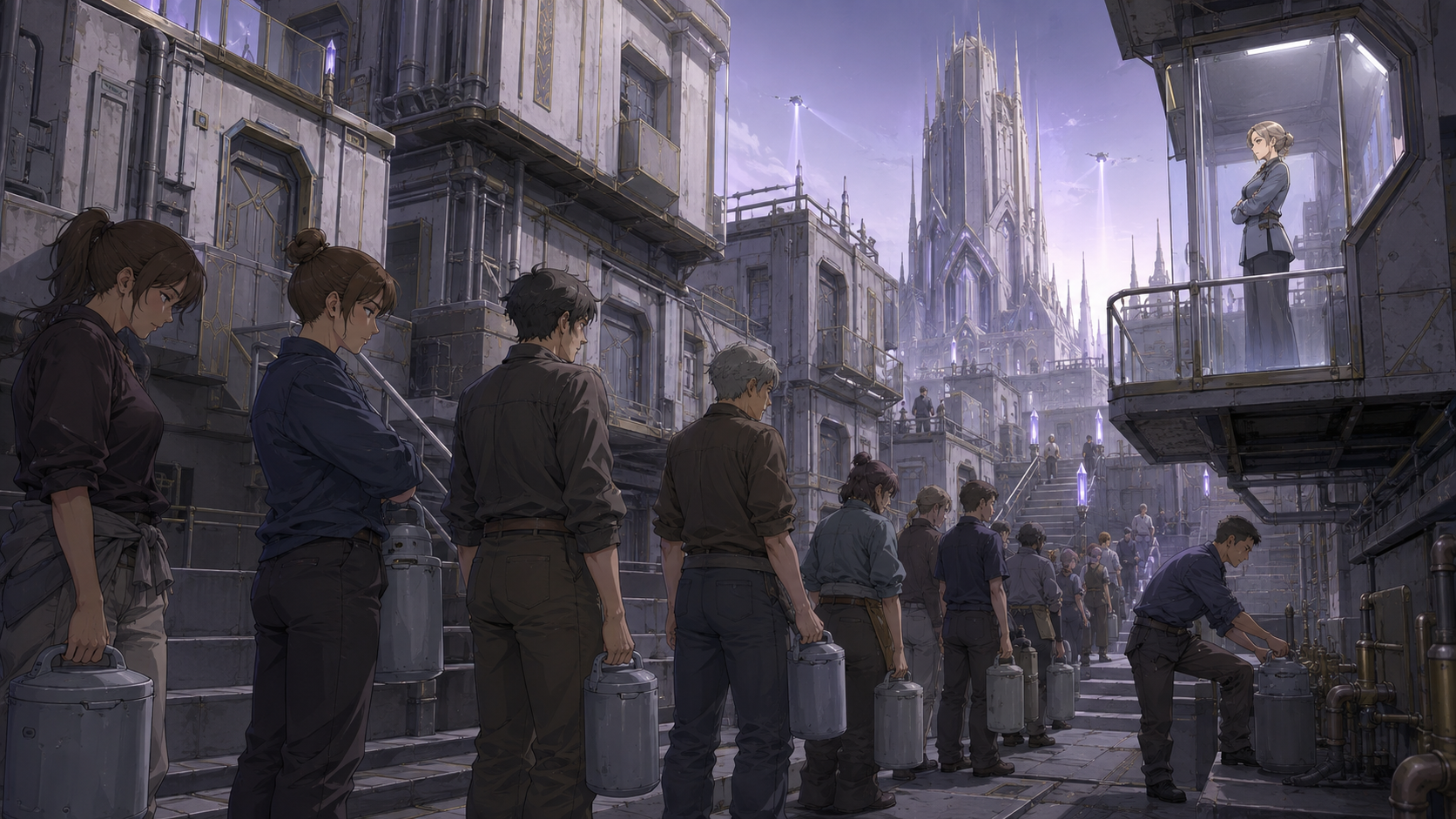
Imperial society is more than punishment. Education, public institutions, service, and working infrastructure give everyday life a framework. Discipline can be a genuine source of meaning.
See the comforts and the costs →

For those who can afford the terms, corporate life can genuinely work: medicine, education, employment, entertainment, and the ability to change how you live.
See the comforts and the costs →Links between fixed destinations. Their infrastructure makes them valuable, and control of a link can matter as much as control of a world.
Known paths between systems. A reliable chart is an asset; an unstable route or a route someone keeps secret can change an entire journey.
Beyond developed routes, long cruises demand time and support. A nearby destination is not necessarily an easy one to reach. What connects it, who controls that connection, and whether it is still usable all matter.
Messages depend on networks too. Distance, damaged infrastructure, and interference can separate a report from the events it describes. There is no guarantee that everyone hears the same news at the same moment.
Modification is ordinary enough to shape everyday life, but access and legal status differ sharply. A luxurious replacement, an industrial adaptation, and a military intervention can all change a body for very different reasons.
Baseline humans, heavily modified people, beastfolk, clones, and people in synthetic bodies share this world. None of those descriptions tells you what someone believes. Beastfolk are not a single nation or faction. A clone’s origin is not proof of obedience, or an explanation of their entire life.
What matters is not simply how a body was made, but who gets to decide what happens to it next.
Mind transfer makes identity a practical problem as well as a philosophical one. Continuity, a separate copy, and an incomplete echo are not the same thing. Copies can diverge. Fragments can preserve something recognizable without preserving a whole person.
The existence of transfer does not make death a trivial inconvenience, or guarantee that someone returned unchanged. Technology may preserve a voice, a memory, or a pattern while leaving the most important question unanswered.
If someone else can rewrite what you want, how do you know the choice is still yours?
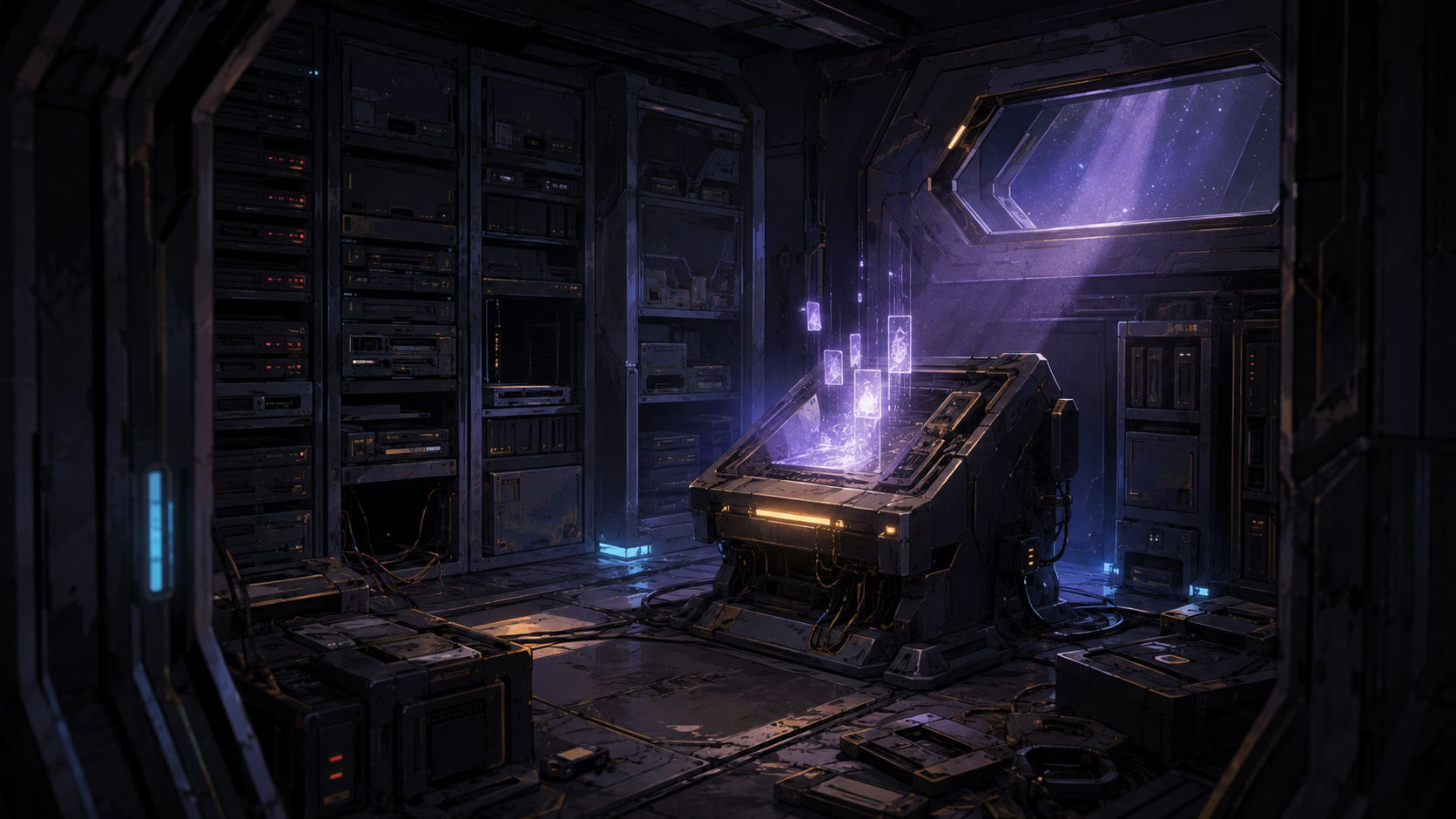
The Far Frontier is where dependable routes and familiar knowledge begin to run out. Beyond it, the other half remains a source of incomplete reports, rumors, and unanswered questions.
There may be more out there than the great powers understand. There may also be far less truth in a story than the person selling it would like you to believe.
 Age verification required 18+
Void Sirens contains mature themes, suggestive imagery, and adult content. You must be at least 18 years old, or the age of majority in your jurisdiction.